
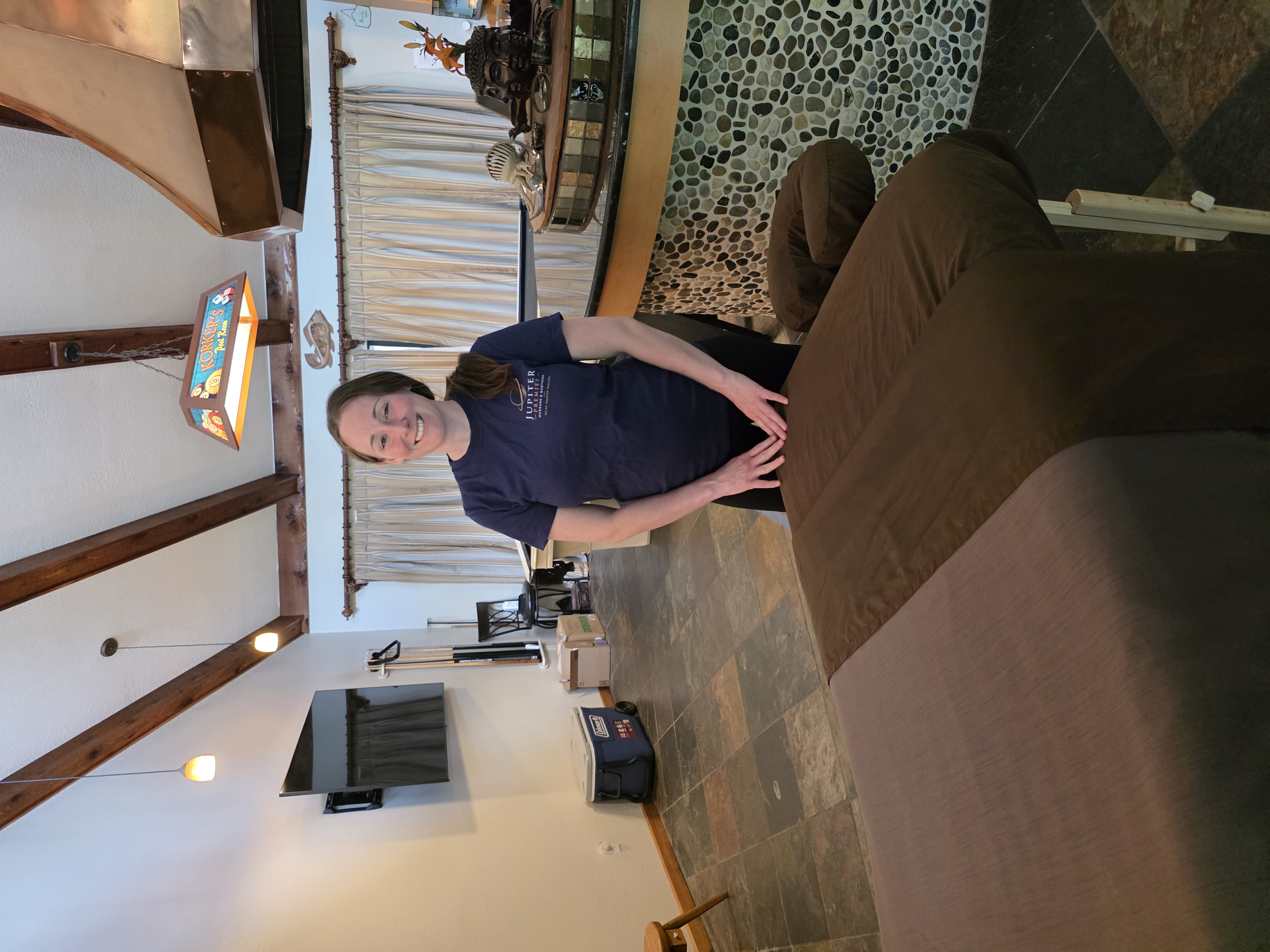
Choose a room with working space, not a perfect spa look
A living room, bedroom, den, or other private indoor area can work well when there is enough open floor space for a full massage table and for the therapist to walk safely around it. Move small furniture, laundry baskets, toys, cords, and breakable objects before arrival so setup can begin without rearranging the room.
Comfort matters more than decoration. Choose a space with a stable temperature, reasonable privacy, and an unobstructed route from the entrance. If the table must go upstairs or through a narrow hallway, mention that when confirming the appointment.
Quick preparation checklist
- Clear a safe path and enough room around the table
- Send parking, gate, elevator, and unit instructions
- Secure pets and arrange supervision for children
- Choose a private room with a comfortable temperature
- Leave time for intake, setup, and breakdown
- Share goals, relevant health information, and areas to avoid
Send arrival details before the therapist is on the road
Mobile appointments run more smoothly when parking, gate, call-box, elevator, front-desk, unit-number, and pet instructions are shared in advance. For a condo or gated community, confirm whether a visitor must be added to a list and where service providers are permitted to park.
If your driveway or entrance is difficult to identify, send a landmark or map pin. A clear path from parking to the setup room matters because the therapist will be carrying a professional table and session supplies.
Know what the therapist brings—and what you provide
Jupiter Premier brings a professional massage table and the essentials needed for the session. You provide the indoor space, access to the residence, and any personal comfort items you specifically prefer. Ask before the appointment if you are unsure whether a particular item will be supplied.
You do not need to purchase special décor or turn the room into a spa. Soft lighting and quiet music are optional. A comfortable room, reliable access, and enough uninterrupted time have a much greater effect on the experience.
Reduce interruptions from phones, pets, and household activity
Silence notifications when possible and tell household members when the session will take place. Arrange supervision for young children so you are not responsible for responding during hands-on time.
Pets should be secured somewhere comfortable before the therapist enters, especially while equipment is being carried and assembled. Even friendly animals may become curious about the table, supplies, or an unfamiliar visitor.
Leave time for intake, setup, and breakdown
The booked massage length refers to hands-on session time. Your therapist also needs time to bring in and assemble the table, discuss your goals and health information, and pack the equipment afterward. Avoid scheduling another commitment immediately against the end of the visit.
During intake, identify the areas you want addressed, the pressure you generally prefer, and anything that should be avoided. Mention recent injuries, procedures, new symptoms, medications, pregnancy, or medical guidance that may affect positioning or technique.
Plan a quiet transition after the massage
One of the best parts of mobile massage is not having to drive immediately afterward. Leave a few minutes to get up slowly, drink water according to your normal needs, and notice how you feel before returning to work, exercise, or household tasks.
Individual responses vary. Follow any personalized guidance discussed with your therapist and contact an appropriate healthcare professional about symptoms that are new, severe, unexplained, or outside a massage therapist's scope.